


It is often hard to determine the factors guiding Donald Trump a month into the US and Israel's campaign of military action on Iran.
But it is clear he has an eye on the oil markets.
A comment – or online message – from the US president about his strategies used to spark significant fluctuations in oil prices, as traders leaped on signs the tensions could escalate or conclude.
However, in recent days, investors seem to be becoming increasingly doubtful about the significance of his remarks.
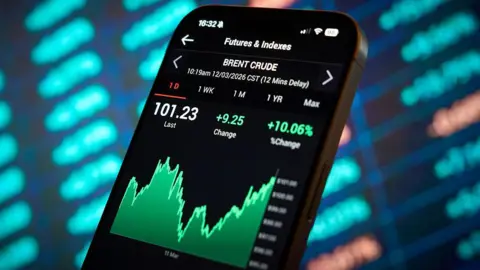
Oil was valued at around $72 a barrel (bbl) before 28 February, when the strikes on Iran commenced.
The week prior, it reached a high of $118 a barrel on 19 March and as of Friday afternoon was trading at around $112 – markedly up from its pre-war price.
Below are several examples from the past month where Trump and the markets appear to have influenced each other – with mixed results.
Navigate with the navigation button to advance to the next slide.
"Oil prices have come to represent wider political and financial risks, surging when Trump's tone grows aggressive and easing when his comments de-escalates," notes one investment manager.
He continues that markets are understandably sensitive to those signals, considering the big financial dangers that accompany increasing oil prices.
"Market participants are trying to assess genuine volatility," he says. "The markets can appear jumpy or confused, but what they're actually doing is navigating event risk in real time, with oil acting as the core of that."
But, it can be tough for traders to figure out how to trade, especially since some of Trump's statements appear designed to influencing oil prices, instead of communicating official strategy, notes another financial strategist.
"As they say, the initial victim of war is truth," he remarks. "It is likely some of the rhetoric back-and-forth around successful negotiations, and the contrary, very much are aimed at simply moving the price of oil."
Investor Response Become Increasingly Tempered
On a recent Thursday, minutes after US stock markets saw their biggest drop since the beginning of the conflict with Iran, Trump announced discussions with Iran were going "very well" and he was delaying planned attacks on Iran's energy infrastructure until at least 6 April.
However, the oil price proceeded to climb.
One head of FX strategy explains that investor responses are "showing less volatility" because of the "significant disconnect" between Trump's optimistic statements and the absence of confirmation from Tehran.
"Considering the optics, many market watchers can not see an imminent end to the conflict and financial markets remain apprehensive."
Another market expert notes investors have also become accustomed to Trump "often altering course at indications of political, equity market or economic trouble".
"We are seeing a level of doubt, or even frank distrust, creeping in at the fringes," he concludes.


